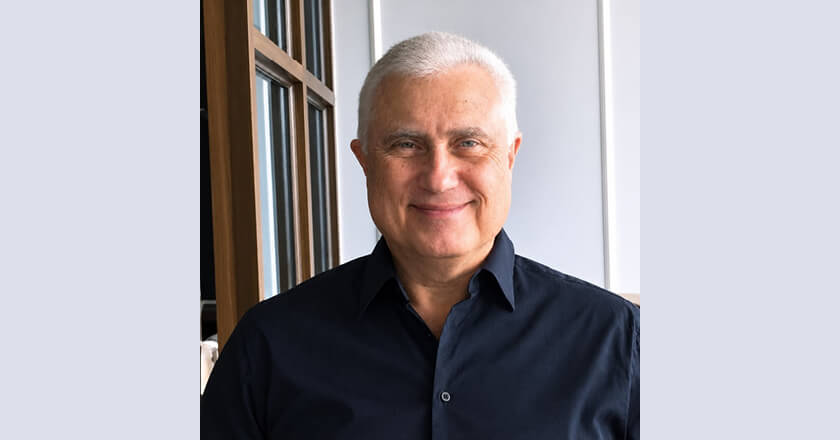
The Hiperdist CEO discusses his 47-year journey, enduring leadership principles, regional expansion, and the partnerships shaping Hiperdist’s continued growth.
Technology distribution across the Middle East and Africa has changed dramatically over the past five decades, evolving from an emerging computing market into a sophisticated ecosystem of vendors, distributors, resellers and solution providers. Few industry leaders have witnessed or influenced this transformation as closely as Antoine Kareh, CEO of Hiperdist.
Kareh began his journey 47 years ago, when computing remained a relatively new field and the region offered significant untapped potential. His early experience in electrical engineering, computer science and Silicon Valley R&D helped shape a vision for connecting global technology innovation with businesses across regional markets.
Under his leadership, Hiperdist has built an extensive presence across the Middle East and Africa, supported by long-term vendor relationships, local market expertise and an expanding portfolio spanning infrastructure, cloud, cybersecurity, AI and emerging technologies.
In this exclusive cover interview with Reseller Middle East, Kareh reflects on the transformations that reshaped the channel, the leadership principles behind Hiperdist’s growth and the legacy he hopes to create through technology.
Interview excerpts:
What inspired your journey into technology 47 years ago, and how has that original vision evolved?
My interest in technology began before the industry was widely recognised in its present form. I joined the newly established Electronics and Informatics department at the School of Engineering in Beirut (ESIB), before travelling to the United States to pursue graduate studies.
Following the completion of my PhD in Electrical Engineering and Computer Science at the University of California, Berkeley, I spent several years working as an R&D project manager for a leading mainframe company in Silicon Valley. It was an exceptionally exciting period because almost everything was still a work in progress. The industry was constantly experimenting, which created enormous scope for imagination, innovation and discovery.
When I returned to the Middle East 47 years ago, there was no established technology channel. Computing was a relatively new and poorly understood field, with limited access to specialist information or widespread industry publications. People were learning through direct experience, experimentation and close engagement with emerging technologies.
The Middle East remained largely untapped, while the prevailing distribution model usually involved one exclusive distributor for each brand in every country. I recognised an opportunity to build a bridge between the innovation emerging from Silicon Valley and the growing requirements of businesses across the region.
That original vision gradually evolved as global technology vendors established a more direct presence in the Middle East. Responsibilities became divided among distributors, master distributors, resellers, systems integrators and other specialised channel organisations.
Our role consequently expanded from introducing technologies to building ecosystems, developing markets and helping partners create sustainable businesses around increasingly complex solutions.
Which industry transformations have had the greatest impact on the technology channel during your career?
Two major transformations have had the most significant impact on the channel.
The first was the emergence of entirely new product categories enabled by advances in miniaturisation. Minicomputers, personal computers, office printers, laptops and mobile phones fundamentally changed the structure of the technology market. The channel had to move from handling relatively small numbers of high-value systems to managing massive volumes of lower-value products.
This transformation required new capabilities across inventory management, logistics, credit, retail reach, partner coverage and after-sales support. Operational efficiency became essential because profitability depended increasingly on scale, speed and disciplined execution.
The second major transformation was the widespread adoption of the internet. Customers and partners gained immediate access to product information, pricing, technical specifications and alternative suppliers. This placed considerable pressure on the traditional intermediary role performed by channel companies, both operationally and financially.
Channel organisations could no longer rely primarily on access to information or products. They had to demonstrate greater value through market knowledge, technical expertise, financing, enablement, integration and customer support.
The internet did not eliminate the channel, but it forced the channel to become more specialised, transparent and relevant.
What enduring leadership principles have guided you through four decades of technological and market change?
My first principle has always been to establish objectives that are simple, clear, measurable and achievable. Complexity can easily distract an organisation from what truly matters. People perform more effectively when they understand the goal, know how success will be measured and recognise their individual role in achieving it.
Another important lesson is not to insist on winning a battle when doing so could mean losing the war. This principle is particularly relevant when managing relationships with vendors and customers. A short-term commercial victory can damage a valuable long-term partnership. Strong leadership requires knowing when to compromise, protect the relationship, and focus on the wider objective.
Building the right team is equally important. Leaders must invest time in selecting capable people, giving them responsibility and creating the conditions in which they can succeed. My role has never been to manage every detail personally. It has been to remove obstacles, establish direction and enable talented teams to perform at their best.
Technology and markets will continue to change, but clarity, sound judgement and trust in people remain enduring leadership fundamentals.
How did you identify and develop opportunities across emerging markets while building a broader regional presence?
The truth ultimately lies with the customer. Hiperdist operates through a proximity-based model, with more than 50 entities across the Middle East and Africa. Our teams maintain close contact with customers and partners in their respective markets, giving us direct visibility into changing business conditions, technology requirements and investment priorities.
Local presence enables us to understand what customers need today while also identifying what they are likely to require in the future. This insight helps us prepare capabilities, introduce relevant brands and position the organisation ahead of emerging demand.
Every market has its own commercial practices, regulatory environment, infrastructure maturity and approach to technology adoption. Opportunities cannot be developed effectively through a single model imposed from a distant headquarters. Local knowledge must be combined with group-level resources, operational discipline and regional scale.
Our global presence is therefore more accurately described as regional depth. We have concentrated on building meaningful coverage across Africa and the Middle East, where our experience, relationships and local infrastructure allow us to create sustainable value.
What role have long-term partnerships and trusted relationships played in your success?
Long-term partnerships have played an essential role, particularly during the group’s early development. Achieving significant growth in complex markets requires the confidence and support of both major suppliers and leading customers. No distributor can build a sustainable business without strong relationships on both sides of the ecosystem.
Many of our principal supplier agreements have been in place for more than 20 years, while several major customers have worked with us for over 25 years. These relationships have endured because they are based on consistency, transparency and a shared commitment to long-term growth.
Trust, however, should not lead to complacency. More than 40 per cent of our turnover comes from new businesses and brands added to the portfolio during the past five years. This reflects our ability to protect established relationships while continuing to identify new opportunities.
Sustainable growth requires a careful balance between continuity and renewal.
Long-standing partnerships provide stability and market credibility, while new technologies and business models keep the organisation relevant to evolving customer and partner requirements.
Which challenges proved most defining in your journey, and what did they teach you about resilience?
The most defining challenges have emerged from both sides of the business. On the supplier side, vendors frequently change their go-to-market strategies, operating models and channel priorities. Regional management teams may also focus on short-term targets that do not always reflect the realities or long-term requirements of individual markets. Distributors must therefore remain flexible while protecting the investments needed to build sustainable local businesses.
On the market side, operating across numerous frontier economies exposes the organisation to constantly changing regulations and financial conditions. Customs procedures, taxation policies, import requirements, currency restrictions and profit-repatriation rules can change with limited notice. Political and economic developments can also disrupt established operating processes.
These uncertainties taught us that resilience must be designed into the organisation from the beginning. We created parallel operational and management structures that can be activated whenever normal processes are interrupted. Contingency planning cannot be treated as a response developed after a problem occurs. It must form part of the operating model. This approach has enabled us to maintain uninterrupted operations across all our markets.
Resilience comes from preparation, decentralised capability and the willingness to adapt quickly without losing strategic direction.
What advice would you offer the next generation of entrepreneurs and leaders entering the technology channel?
Believe in what you are doing, remain focused and persist until you achieve the desired outcome. Meaningful businesses are rarely built quickly, particularly in the technology channel, where credibility, relationships and market knowledge develop over time.
Many emerging leaders have strong ideas and access to more information than any previous generation. The greater challenge is maintaining focus when results do not appear immediately. Technology trends change rapidly, and the pressure to move towards the next opportunity can make sustained commitment difficult.
Persistence should not be confused with refusing to adapt. Entrepreneurs must listen to the market, learn from setbacks and refine their approach. However, they should not abandon a sound vision simply because the journey becomes demanding.
Long-term success requires conviction, patience and disciplined execution. Leaders who combine these qualities with the flexibility to learn will be better positioned to build businesses that endure.
Looking back on 47 years, what impact or legacy would you most like your journey to represent?
I would like my journey to represent the use of technology to improve quality of life for our customers, employees and the communities and countries in which we operate.
Commercial success is important because it enables an organisation to invest, grow and create opportunities. Its wider value, however, lies in the positive impact it can generate. Technology can strengthen businesses, improve access to information, create employment, develop skills and support economic progress.
Our work has always involved more than moving products from vendors to markets. It has been about connecting people and organisations with technologies that help them become more capable, productive and competitive.
The legacy I value most would be the knowledge that our growth contributed to the progress of our partners, employees and communities across the Middle East and Africa.
Source: Tahawul Tech