DUBAI — Iran’s Islamic Revolutionary Guard Corps (IRGC) on Monday threatened to target undersea communication cables crossing the Strait of Hormuz amid tensions with the United States.
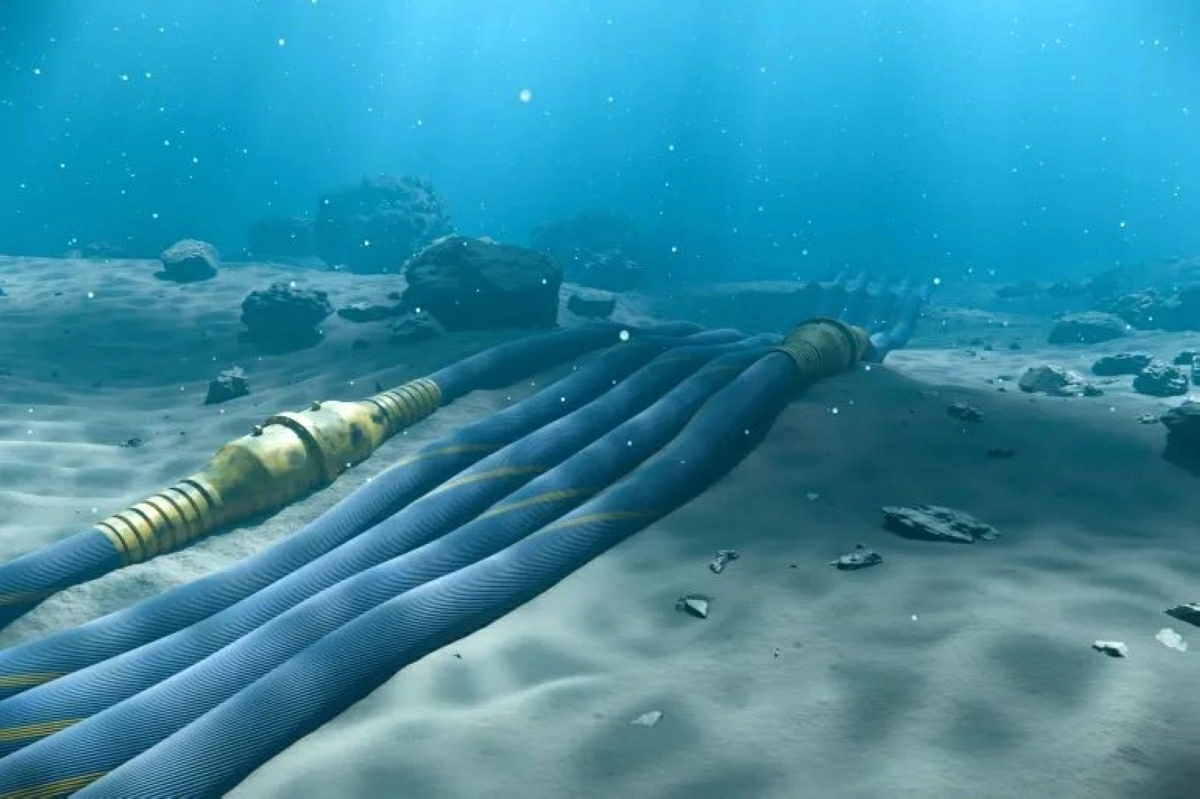
“Seven major data communications cables run beneath the Strait of Hormuz,” said IRGC spokesman Hossein Mohebbi, claiming that all internet and commercial data traffic passed through them.
“We just want them to know that new targets will be unveiled. New weapons will be unveiled,” he added.
Mohebbi made the remarks during a ceremony at Tehran’s Sacred Defense Museum, the Iranian state broadcaster IRIB reported.
He also vowed to drive what he called the remnants of US power out of the region.
The threats followed drone attacks in early March that damaged Amazon Web Services infrastructure in the UAE and Bahrain, causing physical damage, power disruptions and cloud service outages.
More than 90% of data capacity between Europe and Asia passes through subsea fiber-optic cables running beneath the Red Sea, according to telecom data analytics firm TeleGeography.
Iran-backed Houthis control key coastal areas and shipping lanes at the Bab el-Mandeb Strait, the southern entrance to the Red Sea, giving Tehran another pressure point.
Earlier this month, Mohsen Rezaei, secretary of Iran’s Supreme National Security Council, told Iranian state broadcaster Press TV that Tehran could target undersea internet cables, data centers and artificial intelligence facilities linked to the US if another war broke out.
“We have not yet included these assets among our targets,” Rezaei said, warning that such infrastructure could be destroyed in a renewed conflict.
The warnings come as Gulf governments invest billions of dollars in data centers and artificial intelligence infrastructure. Repairing damaged cables could prove difficult in waters affected by military operations, where specialized repair vessels would face security risks and restrictions on movement.
The US and Israel launched a war against Iran on Feb. 28. Tehran responded with missile and drone attacks across the region and effectively closed the Strait of Hormuz, while Washington later imposed a naval blockade on Iranian ports.
The US and Iran subsequently signed a memorandum of understanding in June concerning freedom of navigation in the strait, but implementation stalled over disagreements related to security in the strategic waterway.
Source: Saudi Gazette