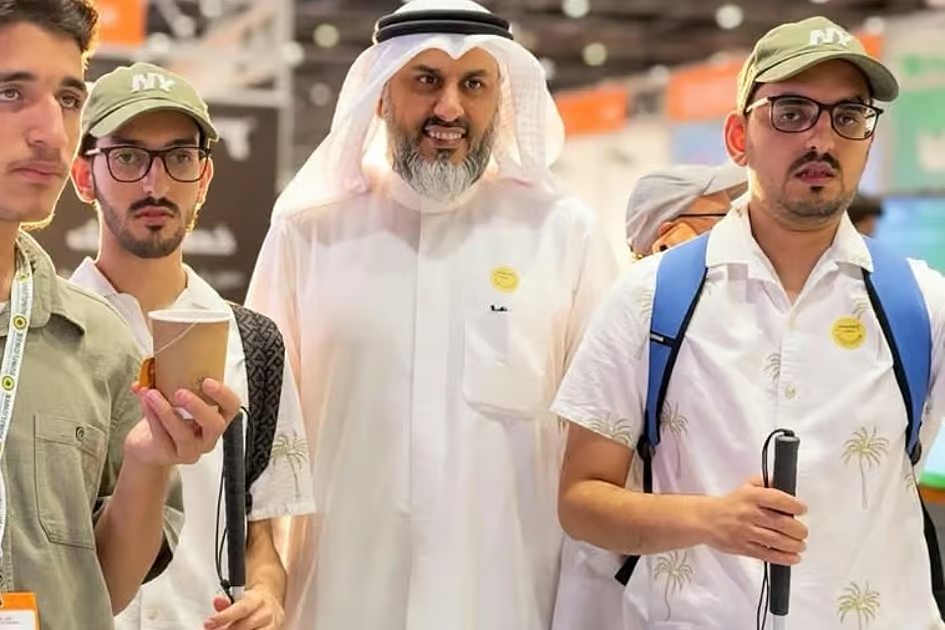
“I am their eyes through which they see, their ears through which they hear, and their tongue through which they speak.”
For Fawaz Al Hasban, these words capture what it means to raise his deafblind sons, Ahmad and Osama. Speaking to Khaleej Times at AccessAbilities Expo in Dubai, the father, known as Abu Abdullah, spoke not of sacrifice, but of responsibility, pride and his determination to help his children experience the world.
Both sons have Usher syndrome, a rare genetic condition associated with hearing loss and progressive vision loss. They also face autism and difficulties with balance, making communication and everyday activities more challenging.
Stay up to date with the latest news. Follow KT on WhatsApp Channels.
“I don’t like people describing me as a heroic or ideal father. I’d rather be seen as a responsible man. What I do for my children is what every father should do for his family,” he said.
A language of their own
Ahmad and Osama communicate through tactile sign language, which allows them to understand information through touch rather than sight.
Both studied at Perkins School for the Blind, while Ahmad continued his education at the Helen Keller National Center for DeafBlind Youths and Adults in the United States, an achievement that fills their father with pride.
Assistive technology has also helped the brothers access information and communicate more independently. Ahmad can use adapted devices to read information on an iPad, access applications, open messages, and send emails. Osama, who retains some vision, can also use an iPad.
For Fawaz, these achievements show why people with disabilities must be given the tools and opportunities to learn, communicate and participate in society.
The family’s determination extends beyond education. During a trip to Jordan, Ahmad and Osama visited challenging destinations, including Ajloun Castle, embracing new experiences and pushing their own boundaries.
“We challenge ourselves, not others. We compete with ourselves, not with others,” Fawaz said.
‘Your children see themselves in you’
Fawaz’s message also goes to parents, whom he believes play a crucial role in shaping their children’s confidence and ambitions.
“Your children see themselves in you. If you are strong, your child will be strong. If you break, your child will break,” he said.
He urged families to strengthen their own abilities and confidence rather than expecting their children to progress without making that same effort themselves.
He also challenged how society views disability, arguing that differences in ability should be recognized as part of human diversity rather than treated as a measure of a person’s worth.
Describing his children as gifts from God, Fawaz said raising them had strengthened his patience and faith.
Source: Khaleej Times