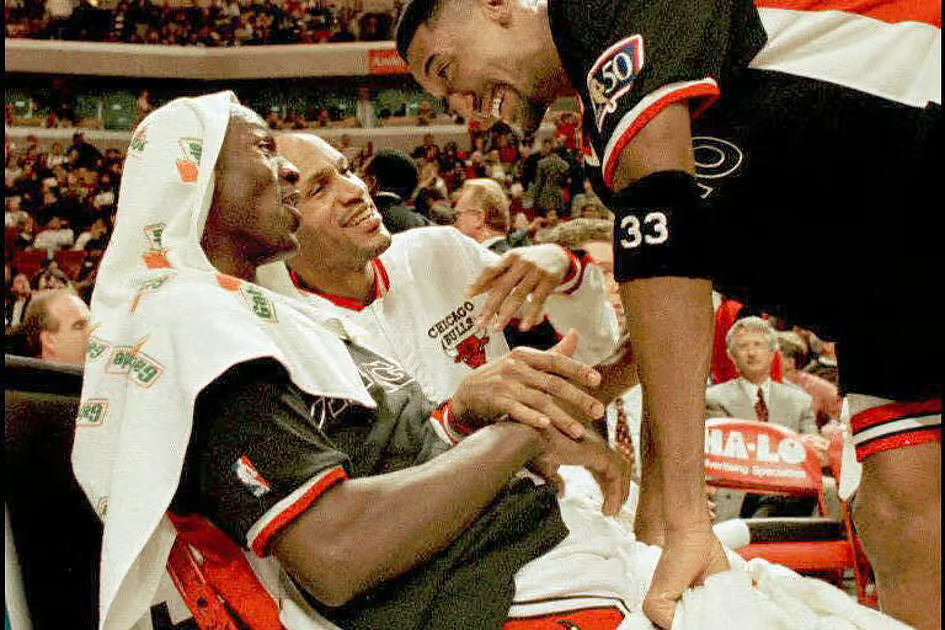
Ron Harper knows what it takes to be a champion cager, having played a key role in the Michael Jordan-inspired Chicago Bulls’ three championship-winning campaigns in the 1990s.
The 62-year-old is also part of a select group of players who have won five or more NBA titles.
Harper’s five included three with the Bulls (1996, 1997, 1998) and two with the Los Angeles Lakers (2000, 2001), for whom a young Kobe Bryant was beginning to deliver jaw-dropping performances.
Harper was not the star for either the Bulls or the Lakers. But with his defensive discipline and work ethic, he became a vital cog in two of the greatest dynasties in NBA history, winning five titles in the span of six years.
No wonder he emphasised hard work and discipline while spending time with aspiring cagers at NYU Abu Dhabi last month during the first-ever NBA Academy Select Showcase.
Thirty-six top high-school prospects from the Middle East, Africa and South Asia earned a rare opportunity to take part in skills-development sessions under the watchful eyes of Harper, former NBA star Jason Richardson and veteran NBA assistant coaches Damian Cotter, Dan Craig, Henry Domercant and James Wade.
The four-day event was part of an initiative by the NBA and DCT Abu Dhabi to give a world-class platform to promising players from the Middle East, Africa and South Asia.
In an interview with Khaleej Times, Harper opened up about how players from the Middle East region can bridge the gap between themselves and players from basketball powerhouses like the US and Eastern Europe.
Q: You were in Abu Dhabi recently to work with some of the best young prospects from the Middle East, Africa and South Asia. Having played at the highest level, what are the first things you look for when you see a young player who has the potential to make it to the NBA?
The first thing is attitude. You want players to come into camp ready to participate, prepared to work and willing to listen to what’s being asked of them. I think every kid here has done that. They’ve worked hard, listened to the coaches and shared the basketball. Those are the kinds of things you want to see from young players.
Q: The NBA is investing heavily in developing young talent in this part of the world. Do you believe the Middle East and South Asia can eventually produce NBA players, and what do you think is still needed to bridge the gap with traditional basketball markets?
For sure. Any young player with the dream of playing in the NBA has to understand that it takes a tremendous amount of hard work. It’s not going to be easy, but the kids here have the same skills and tools as young players in more established basketball markets. If they continue to work and develop their game, they’ll give themselves a chance to reach that level someday.
Q: Your own career is a great example of adapting your game. You went from being a high-scoring player early in your career to becoming an important defensive and playmaking piece on Michael Jordan’s Bulls and later Kobe Bryant’s Lakers. What did that transformation teach you about longevity and winning?
Growing up, you always want to be the best basketball player you can be. What I learned was that when you’re part of a great team, sometimes you have to adapt your game and find different ways to contribute. I knew I wasn’t going to get all the shots or have the same role I had earlier in my career, but that gave me an opportunity to show my all-around game and the different ways I could contribute. For me, it was about doing whatever I could to be the best basketball player I could be and help the team.
Q: You had the rare experience of playing alongside both Michael Jordan and Kobe Bryant. What similarities did you see in their mentality, and what was different about the way each of them approached the game and their teammates?
The biggest similarity was how hard they worked. They both loved the game and came into the gym every day ready to give everything they had. Neither of them took days off. They worked, they competed and they loved playing basketball. That work ethic and commitment to the game was something they both shared.
Q: For a 16- or 17-year-old prospect standing here in Abu Dhabi dreaming of an NBA career, what is the one piece of advice you would give them that goes beyond basketball skills?
Continue to work hard and don’t take days off. If you believe you have a chance to play this game for a long time, you have to stay committed to it. Keep working on your game and believe that you’re doing the right things. That work and commitment are what will give you the best chance to keep progressing.
Source: Khaleej Times