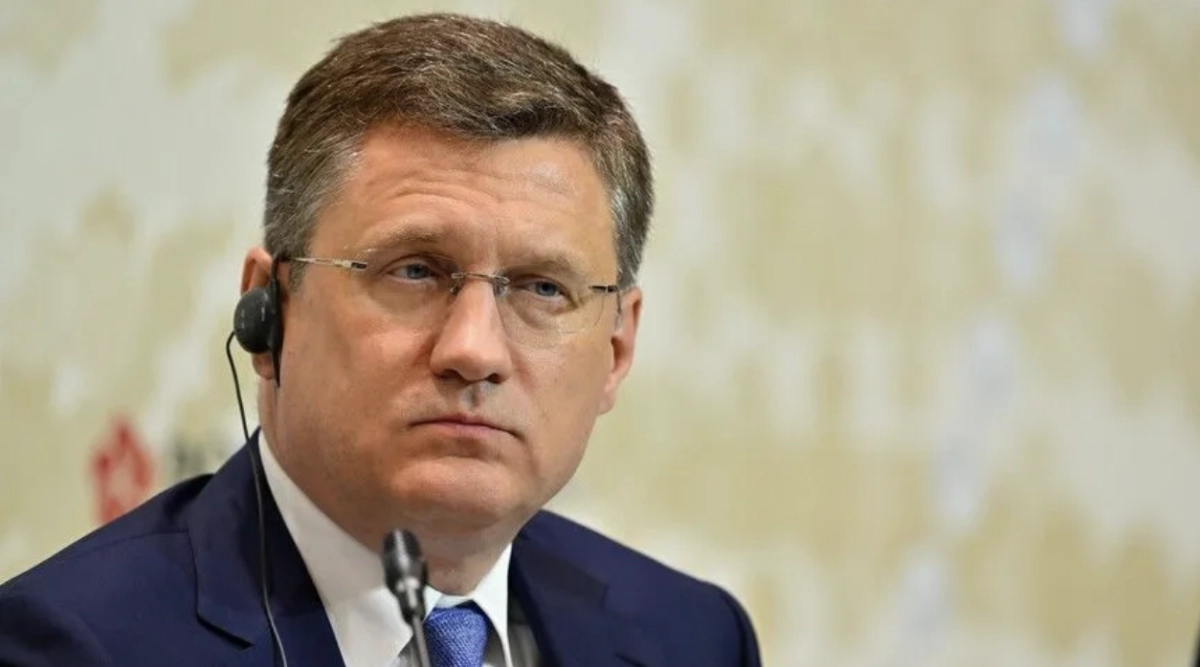
MOSCOW — Russia has dispatched its first oil tanker to international markets following a supply agreement with the United States, Deputy Prime Minister Alexander Novak said Saturday.
Speaking on the political talk show Solovyov Live, Novak said Moscow was facing no difficulties selling its oil, with several countries expressing interest in purchasing Russian supplies.
“I am aware that the first tanker has already been loaded and dispatched from the port at Dikson,” Novak said, referring to the Russian Arctic seaport on the Kara Sea coast in the Krasnoyarsk region.
He said Russia had “no issues” with oil sales, citing strong international demand.
The announcement follows an October 9 agreement unveiled by US President Donald Trump after a phone call with Russian President Vladimir Putin, under which Moscow agreed to supply diesel fuel to the United States and global markets.
Putin said Russian diesel exports would benefit the global economy, while Ukrainian President Volodymyr Zelenskyy criticized the agreement, warning that easing restrictions on Russian fuel exports could generate additional revenue for Moscow’s war effort.
Novak said the global oil market was currently facing a supply shortage of approximately 4 million to 6 million barrels per day, contributing to elevated prices.
He warned that prices could rise further unless disruptions affecting the Strait of Hormuz were resolved.
“If the opportunity for supplies from Persian Gulf countries opens up, it seems to me that the market will rebalance within a year to a year and a half,” Novak said.
He also cautioned that the ability to stabilize global markets through the release of strategic oil reserves was becoming increasingly limited.
According to Novak, existing reserves were already being depleted, reducing their effectiveness as a tool to offset supply disruptions.
Turning to natural gas, Novak said Russia expected to deliver 39 billion cubic meters of gas to China through the Power of Siberia pipeline.
He added that Moscow and Beijing had agreed to expand the pipeline’s capacity to 44 billion cubic meters.
Novak also said Russia retained the technical capability to resume gas deliveries to Europe through the Nord Stream pipeline system, despite extensive damage to its infrastructure.
“Currently, three of the four lines are inoperable as a result of terrorist attacks and explosions. One line remains intact, and supplies could be delivered through it,” he said.
“However, this depends on the consumers — on our European counterparts,” Novak added.
The Nord Stream pipelines, which previously transported Russian natural gas to Europe through the Baltic Sea, have remained largely out of operation following explosions that damaged the infrastructure.
Source: Saudi Gazette