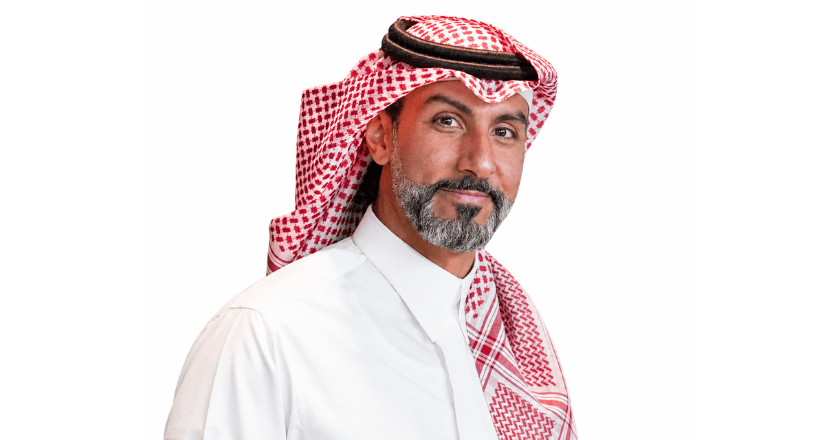
Salam’s Chief Carrier & Wholesale Officer explains why partnerships, resilient terrestrial routes, and measurable outcomes will decide whether the Kingdom’s AI infrastructure ambitions deliver
Saudi Arabia is no longer content to be a transit point for the world’s data. With submarine cables landing on both its Red Sea and Arabian Gulf coasts and a national strategy targeting up to 1.5 GW of data-centre capacity by 2030, the Kingdom is positioning itself as a destination where AI workloads are hosted, processed and monetised. Ambitious targets alone will not get it there, however. Turning capital investment into reliable, scalable AI services will depend on resilient terrestrial routes, deep public-private partnerships and a sharper focus on measurable business outcomes.
Salam sits at the heart of this shift. Its 19,000+ km fibre network links international landing stations in Al Khobar and Jeddah to six data centres across the Kingdom, giving the operator a clear view of both the opportunity and the obstacles ahead. Eng. Amjad Arab, Chief Carrier & Wholesale Officer at Salam, discusses why telcos must evolve into “techcos”, how land, power and a vast domestic market strengthen the Kingdom’s hand, and why inference, enterprise AI and regional cloud will drive the next wave of demand. He also outlines the execution gaps that must close if Saudi Arabia is to convert infrastructure ambition into real-world impact.
Interview excerpts
What will it take for the Gulf to move from a connectivity corridor to a destination for hosting AI workloads?
The shift from connectivity corridor to AI destination demands a new approach to digital infrastructure partnerships. No organisation scales alone at the national level when the goal is to rewire an entire economy for AI. Saudi Arabia’s digital economy now contributes SAR 495 billion to GDP, and the Kingdom ranks 6th in the UN E-Government Development Index and 4th in the Digital Services Index. No single company or ministry achieved this alone. With 77% of transformation projects failing, enterprises need strategic partners who share accountability for outcomes, not more suppliers. Telcos must therefore evolve into “techcos”, expanding into cybersecurity, cloud, IoT, AI and data centres. GCC operators are using strong balance sheets to fund M&A and partnerships, but deeper relationships and trust will separate the market leaders.
How do Saudi Arabia’s land, power, connectivity and domestic market position the Kingdom to attract AI infrastructure investment?
Saudi Arabia has the combination of assets that makes it a natural home for AI infrastructure. The National Data Center Strategy targets up to 1.5 GW of capacity by 2030, the AI data-centre market is forecast to reach USD 1.74 billion by 2030, and data-centre IT power load is projected to grow around 29% a year. Domestic demand is substantial. The ICT market stands at SAR 190 billion and is projected to grow from USD 65.45 billion in 2026 to USD 101.3 billion by 2031. More than a million SMEs make up 90% of registered enterprises and contribute 28.7% of GDP, yet 84% have not adopted e-commerce. The smart cities market is set to nearly triple to USD 18.74 billion by 2030. Strong foundations are already in place, including a 19,000+ km fibre network, data centres in Riyadh, Jeddah and Al Khobar, and cable landing stations in Al Khobar and Jeddah. The Kingdom also ranks third globally for 5G speed and first in cybersecurity. Delivering 1.5 GW, however, depends on foreign investment, localisation and public-private collaboration, since no single organisation holds all the capital, expertise and know-how required.
Why do you expect inference, enterprise AI and regional cloud to drive the next wave of demand beyond AI training clusters?
The next wave of demand will come from operational deployments rather than training. Real-world examples include AI CCTV analytics, facial recognition and unattended object detection over Private 5G, and edge-based security triggers that analyse feeds locally to flag unauthorised access, fire hazards or emergencies. Edge computing processes data where it is generated, cutting latency and enabling real-time decisions, while edge nodes feed Digital Twin environments that support predictive simulations from crowd management to energy optimisation. IoT sensors add real-time monitoring of HVAC, lighting, water and energy. Research shows 60.4% of organisations cite operational efficiency as the top outcome of digital investment, followed by productivity (57.1%) and data accessibility (46.2%). Achieving this requires cloud that scales, AI embedded into operations and security built into the architecture.
Regional cloud demand will keep rising as cloud-first mandates and data sovereignty rules keep workloads local.
How does Salam connect submarine cable landing stations to data centres through diverse, low-latency terrestrial routes across Saudi Arabia?
Salam’s 19,000+ km fibre network forms a nationwide digital backbone, linking international cable landing stations in Al Khobar and Jeddah to six data centres across Riyadh, Jeddah and Al Khobar. This architecture supports cloud hosting, data sovereignty and low-latency services for enterprise and government. Landing stations on both the Red Sea and Arabian Gulf coasts provide geographic diversity and resilience. Satellite connectivity adds a further layer of redundancy to ensure business continuity. Enterprises running cloud-based inventory or real-time analytics often find that connectivity quality decides whether they scale or stall, and the value proposition has quietly shifted from bandwidth to resilience.
What connectivity challenges must the Kingdom address to turn infrastructure investment into reliable, scalable AI services?
The core challenge is closing the gap between ambition and execution. BCG reports 77% of transformations fail to deliver long-term results, Gartner says 85% of initiatives never scale beyond pilot, and an estimated $900 billion in digital transformation investment is wasted globally each year. Many proofs of concept prove technical feasibility but never reach production. On the demand side, 84% of SMEs have yet to adopt e-commerce, and a Dammam logistics firm cannot run real-time fleet tracking without consistent connectivity. On the supply side, reliable enterprise connectivity is table stakes. Differentiation lies in cloud that scales without hidden costs, embedded AI, security by design, private 5G and managed services that free IT teams to innovate. Deloitte research shows 73% of executives cannot define the impact of their digital investments. The Kingdom therefore needs connectivity partners who deliver measurable outcomes and accountability, not simply access.
Source: Tahawul Tech