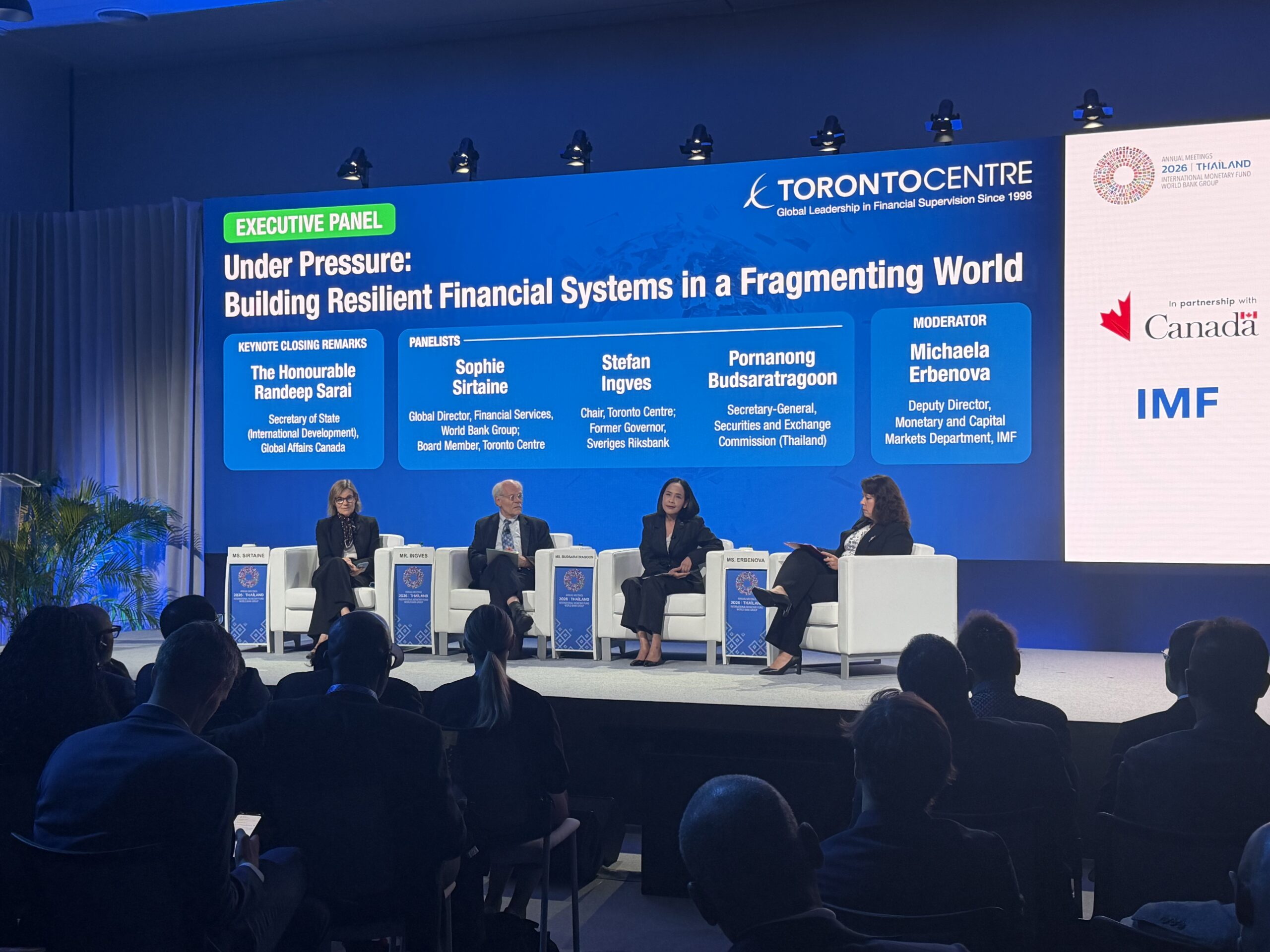
BANGKOK, 16th October, 2026 (WAM) — The Central Bank of the UAE (CBUAE) is strengthening its international financial partnerships through bilateral meetings with major central banks and financial institutions during the 2026 Annual Meetings of the International Monetary Fund (IMF) and the World Bank Group (WBG) in Bangkok, where international officials and experts have praised the UAE’s financial system as a successful model for promoting stability and resilience.
The meetings, taking place from 12th to 18th October, aim to strengthen cooperation, facilitate knowledge exchange and reinforce strategic partnerships with international financial institutions.
As part of these engagements, the CBUAE held bilateral meetings with the Bank of Korea, the central bank of the brotherly Republic of Korea, and the Monetary Authority of Singapore (MAS), to discuss ways to enhance financial sector cooperation, exchange expertise on matters of mutual interest and explore opportunities to develop bilateral partnerships.
The meetings reflect the CBUAE’s commitment to expanding cooperation with international partners, strengthening coordination and sharing knowledge and expertise to support financial sector development and consolidate partnerships with global financial institutions.
Meanwhile, international financial and regulatory officials and experts commended the strength and quality of the UAE’s financial system, highlighting its role as a successful model for enhancing stability, resilience and adaptation to rapid changes in the global financial sector.
Their remarks came during panel discussions held on Friday as part of the IMF-WBG Annual Meetings, where participants examined ways to build resilient financial systems amid global challenges, strengthen financial institutions’ capacity to address emerging risks and harness technological innovation to support sustainable economic growth.
During a session entitled “Under Pressure: Building Resilient Financial Systems in a Fragmenting World”, the participants discussed mounting pressures on financial supervisors as rapid technological innovation, cyber threats, geopolitical fragmentation, climate-related vulnerabilities and evolving market structures reshape the global financial landscape.
The discussions highlighted the need to move beyond responding to known risks towards anticipating emerging vulnerabilities, strengthening financial system resilience and ensuring continued support for sustainable growth through data-driven supervisory approaches, greater cross-border cooperation and stronger institutional capacity.
Sophie Sirtaine, Global Director, Financial Services, WBG and Board Member of Toronto Centre, praised the UAE’s efforts to develop its financial sector and build resilient systems that promote stability in statements to the Emirates News Agency (WAM).
Stefan Ingves, Chair of Toronto Centre and former Governor of Sveriges Riksbank, also commended the quality of the UAE’s financial systems, describing the country’s experience as a successful model for developing supervisory frameworks and strengthening financial sector resilience.
Pornanong Budsaratragoon, Secretary-General of Thailand’s Securities and Exchange Commission, emphasised the importance of exchanging expertise and experiences across regions and drawing on Asia’s leadership in financial innovation and cross-border integration to build resilient financial systems that support development, innovation and stability amid growing global challenges.
Another session, entitled “Artificial Intelligence and Escalating Cyber Risks: Implications for Macroeconomic and Financial Stability”, examined the growing implications of rapid advances in artificial intelligence for cybersecurity, systemic resilience, and macroeconomic and financial stability, amid concerns that emerging technologies could transform the nature and scale of cyber threats.The participants explored how artificial intelligence is reshaping the cyber threat landscape and reviewed perspectives from international institutions, the private sector and policymakers on the responses needed to harness the potential of these technologies while mitigating risks to financial systems and economies. They also highlighted the importance of stronger coordination among countries and institutions to address growing digital challenges.
A further session, entitled “Health Works: Private Capital, Public Good”, explored ways to strengthen public-private partnerships to develop healthcare systems, addressing the role of vaccines, supply chain security, primary healthcare and the transformative potential of digital technologies and artificial intelligence in healthcare delivery.
Speakers reviewed policies, partnerships, financing mechanisms and investment opportunities to translate healthcare plans into measurable outcomes, drawing on international experience in private capital mobilisation, health financing and national reform programmes.
The discussions reflected the broad scope of the IMF-WBG Annual Meetings, encompassing financial stability, digital transformation, cyber risks and the development of vital sectors in support of sustainable development.
Source: Emirates News Agency