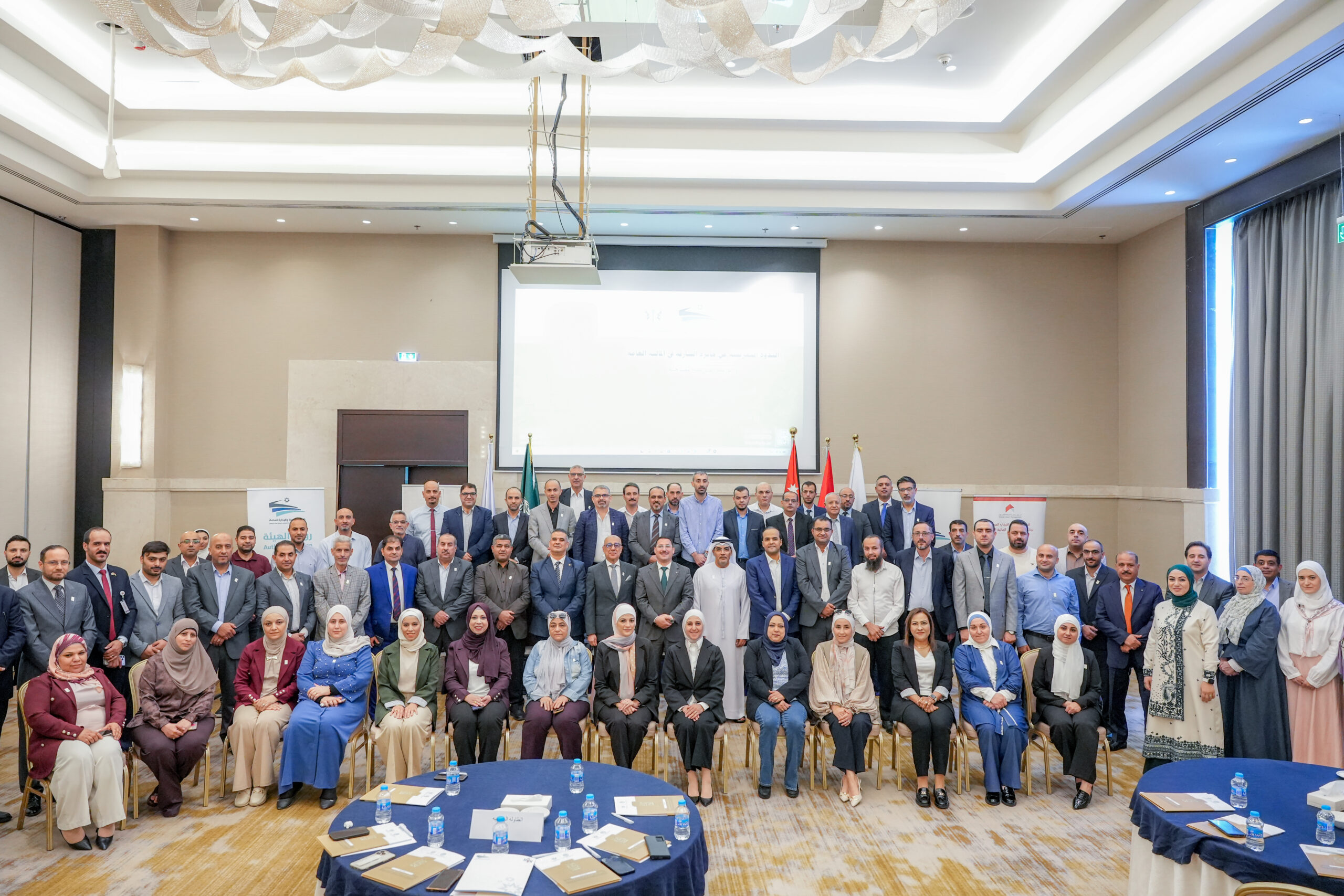
SHARJAH, 2nd September, 2026 (WAM) — Marking the launch of its awareness and promotional programme for the fourth cycle, the first awareness seminar of the Sharjah Award for Public Finance commenced Tuesday in Amman, Jordan.
Organised by the Arab Administrative Development Organisation (ARADO), affiliated with the League of Arab States, the two-day seminar includes a specialised training course on its second day.
The Amman seminar marks the first stop in a series of awareness and promotional seminars that the Award Secretariat plans to organise across several Arab capitals during the fourth cycle, building on the third cycle, which featured 11 seminars across 11 Arab countries.
The opening ceremony was attended by delegations from the Sharjah Award for Public Finance and ARADO along with representatives of Jordanian government entities involved in public finance management, as well as experts and specialists.
Sheikh Rashid bin Saqr Al Qasimi, Director of the Sharjah Finance Department and Secretary-General of the Award, noted that over the past ten years, the Award has expanded from six categories in its first cycle to 22 categories in its third cycle, attracting 494 participants, of whom 81 were named winners across the institutional and individual categories.
He added that selecting Amman as the starting point for the fourth cycle’s awareness and promotional tour was no coincidence. Rather, it reflects the Award’s recognition of the Hashemite Kingdom of Jordan’s prominent role in government financial management, as well as the strong participation of its institutions and professionals in previous cycles.
He announced that the Award’s fourth cycle features 24 categories, equally divided between 12 institutional and 12 individual categories, representing an increase of two categories compared with the 22 categories offered in the third cycle.
This expansion forms part of the Board of Trustees’ continuous efforts to broaden participation and incorporate new areas within the government public finance ecosystem, providing more Arab institutions and professionals with the opportunity to compete.
For his part, Dr. Nasser Al-Hatlan Al-Qahtani, Director-General of the Arab Organisation for Administrative Development (ARADO), explained that the Organisation continues to serve as a strategic partner of the Award at both the technical and logistical levels since its inception.
He noted that the number of awareness seminars increased from four seminars across four Arab countries in the first cycle to 11 seminars across 11 Arab countries in the third cycle.
The Award Secretariat revealed that the fourth cycle will see the launch of the “Ambassadors of Excellence” initiative, an honorary designation granted to individuals who have won one of the approved individual categories or participated as part of a team that prepared a winning submission in the institutional categories.
The initiative aims to promote the Award across the Arab world, foster a culture of excellence among entities and individuals, increase participation, and enhance the quality and competitiveness of submissions.
The first day’s agenda included an opening session and two awareness sessions, during which the Award’s objectives, its 24 institutional and individual categories, and the evaluation criteria for each category were presented, alongside participation requirements and the registration process. The sessions concluded with an open Q&A for prospective participants.
The second day features an accompanying training course titled “Public Finance Management and Integrated Oversight: Roles and Tools in Jordanian Institutions,” delivered by Dr. Ghassan Jamal Al-Nsour across two sessions.
The first session focuses on “Understanding Public Finance and the Public Finance Cycle in the State,” while the second addresses “The Public Finance Oversight System in the Hashemite Kingdom of Jordan,” taking participants from the broader conceptual framework to practical application within the Jordanian institutional context.
The Award’s figures reflect a decade of sustained progress. Across its three previous cycles, it attracted 494 participants from across the Arab world, with 81 winners recognised at the institutional and individual levels.
The number of categories expanded from six in the first cycle to 22 in the third cycle, equally divided between 11 institutional and 11 individual categories, before reaching 24 categories in the fourth cycle.
In terms of regional reach, the number of awareness seminars increased from four seminars in the first cycle to 11 seminars across 11 Arab countries in the third cycle. In addition, four major Arab financial forums were organised in Cairo, Tunis, Tangier and Istanbul, attracting more than 750 public finance specialists and officials.
Source: Emirates News Agency