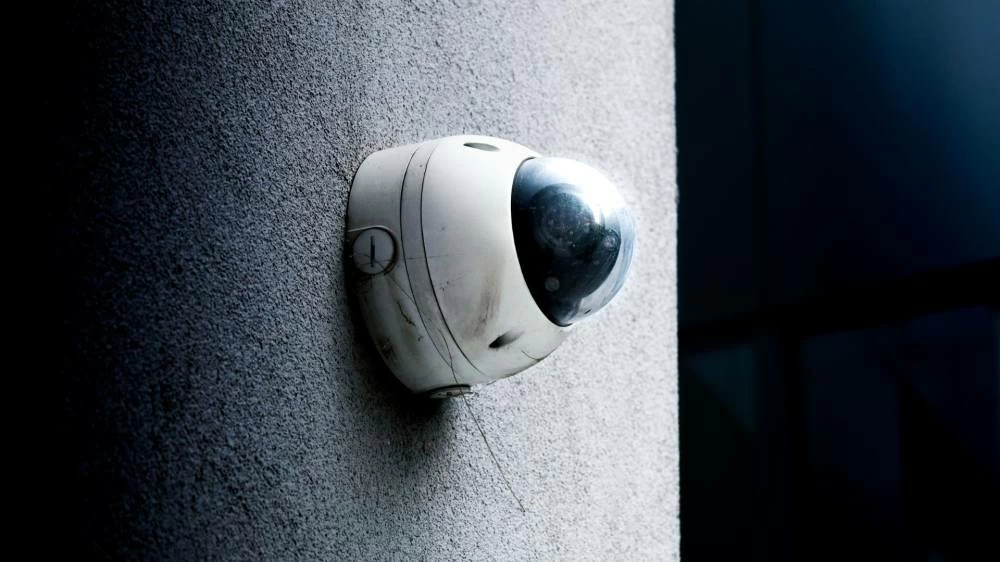
Dubai: The Director of the Digital Security Department at the Ministry of Interior and Head of the Arab Experts Team at the Council of Arab Interior Ministers, Brigadier General Dr. Engineer Ibrahim Hamid Al-Mayahi, warned of the increasing risks associated with the spread of home cameras, which have become part of modern homes to monitor entrances, children’s rooms, living rooms, and pets, through their connection to Wi-Fi networks, cloud systems, and smartphones.
Al-Mayahi confirmed that these cameras record the most minute details of the family’s daily life, and therefore hacking them represents a direct and blatant violation of family privacy, the effects of which go beyond stealing a password that can be changed, as hackers can copy, keep and share the footage, which makes the repercussions of the hacking far-reaching.
He pointed out the danger of the sensitive details revealed by the cameras, including the faces of residents and children, and their daily routines, such as times of departure, return, sleep, and travel, as well as revealing private spaces, such as bedrooms, living rooms, and corridors, and recording voices and conversations via built-in microphones and two-way communication.
He revealed an incident involving a domestic worker whose residency had ended and who had left for her country, but who continued to monitor the cameras of the house where she worked through an app, without the family’s knowledge, until they became aware of the matter.
Al-Mayahi stressed the importance of controlling access permissions to cameras, especially those granted to domestic workers, and canceling them when they are no longer needed, as well as constantly changing the passwords.
Camera mounting locations
Al-Mayahi specified suitable locations for installing cameras, including the front door, external corridors, garage, and the garden at the entrance to the house, warning against placing them in bedrooms, bathrooms, children’s rooms, changing areas, or pointing them at any angle that reveals the neighbour’s balcony or garden, in order to protect privacy.
Regarding the vulnerabilities and weaknesses in these devices, he explained that the cyber attacker is always looking for the ‘weakest link’ in the security chain, stressing that the security of the camera is linked to the security of all links in the system, starting with the device itself, passing through the home network and the connection to cloud services, and ending with the phone application that controls it.
During an awareness workshop held by the General Women’s Union in cooperation with the Ministry of Interior, entitled ‘Smart Home Cameras: Eyes Watching and a Hidden Threat’, Al-Mayahi reviewed the most prominent risks associated with these devices, stressing that protecting them begins with proper planning when purchasing, and not being satisfied with looking at discounted offers.
Six risk factors
He explained that the risks are based on six main points, the first of which is the use of weak or default passwords, which is one of the most common ways of unauthorised access, and the second is the reliance on old, outdated software that contains known security vulnerabilities that are left unaddressed.
The third aspect is the weakness of home network protection, through leaving open ports and relying on unprotected wireless networks, while the fourth relates to cloud services and internal access privileges, including the possibility of abuse of privileges, the ability of some employees of supplying companies to view recordings, as well as the risk of the supplying entity itself being exposed to hacking.
The fifth point relates to forgotten posts, such as old access links and former users remaining connected to the system without having their privileges revoked, while the sixth is the leaking or misuse of footage, by copying, selling, resending and broadcasting it without the permission or knowledge of its owners.
Al-Mayahi pointed out that stealing a camera application account, or granting access privileges without managing and reviewing it, could open the way for hacking the system, even if the rest of its components are secure.
Case study: Hacking 120,000 cameras
Al-Mayahi cited a real-life case announced by the Korean National Police in December 2025, which involved four separate arrests, following the hacking of 120,000 cameras in homes, karaoke rooms, pilates studios, and women’s clinics.
He explained that the attackers relied on simple passwords, then sold the footage through an external website, and that the clips offered by only two sellers constituted about 62% of the clips offered.
He explained that the lesson learned from the incident is that attackers prefer easy targets, and that indoor cameras in bedrooms and living rooms are among the most targeted cameras. He stressed the importance of contracting with reliable service providers who apply strict controls for accessing recordings.
He stressed that official investigations in a number of countries showed that attackers relied more on simple passwords than on complex techniques, noting that the most common mistakes include keeping the default passwords available with factory settings, leaving the settings set by the installation technician without review or change, reusing the same password across different applications, and not activating two-factor authentication.
15-minute protection guide
Al-Mayahi advised implementing six preventive steps immediately upon installing any smart camera, stressing that it does not take more than 15 minutes, but it forms the first basis for protection.
The steps include:
- Immediately changing the default login details.
- Using a unique and long passphrase for each device.
- Enabling two-factor authentication on the camera app and its associated email.
- Regularly updating the software, with automatic updates enabled.
- Using neutral names for cameras and avoiding labels that reveal the nature of the space, such as ‘Master Bedroom’.
- Disabling unused features such as remote access, microphone, and UPnP (Unplugging and Playing), and reviewing the user list and removing old accounts and posts.
Securing the home network
He stressed the need to secure home internet by keeping sensitive devices, such as phones and computers that are used to access banking apps, on the main network, and allocating a separate ‘guest network’ for surveillance cameras and smart TVs.
He advised using modern encryption protocols, such as WPA3 or WPA2, changing the router management password, disabling remote management, updating its software, and reviewing the devices connected to it monthly.
He called for activating privacy mode when at home, setting motion monitoring zones away from neighbours’ properties, and reducing the retention time of cloud recordings.
Family responsibility
Al-Mayahi identified the responsibilities of family members in protecting the cameras, calling on parents to take full control of the accounts, choose devices with high security standards, educate children and teenagers not to share access links, and report any unusual camera movements.
He stressed the need to inform domestic helpers and guests about the locations of cameras, and to ensure that they are not being recorded in their private spaces.
He pointed out warning signs that may indicate that the camera has been hacked, including its automatic movement, the emission of unfamiliar sounds, receiving login alerts from unknown devices, the power indicator lighting up at times when it is supposed to be off, or the settings changing suddenly.
He directed that immediate action be taken upon detecting these signs, including disconnecting the camera from electricity and the Wi-Fi network, changing passwords, logging out of all active sessions, performing a factory reset and updating software, while preserving digital evidence and reporting to the relevant authorities in the country.
He warned against responding to hackers’ demands or paying them any money when receiving extortion messages.
International indicators
Al-Mayahi pointed out that international reports revealed a significant increase in attempts to attack Internet of Things devices, including home cameras, with most successful breaches still being linked to weak or unchanged passwords.
He reviewed global statistical data, which showed that the average number of devices connected to the internet in a single home is 22 devices, while the average number of attacks that homes are subjected to is 29 attacks per day.
He added that the data detected 13.6 billion attacks on Internet of Things devices, while 50% of the exposed vulnerabilities and weaknesses target digital broadcasting devices, screens, smart TVs, and IP network cameras.
Legal protection of privacy
Al-Mayahi explained that Article 44 of Federal Decree-Law No. 34 of 2021 stipulates that anyone who uses technology to violate the privacy of others without their consent, including filming, recording, or sharing such content, is punishable by imprisonment for a period of no less than six months and a fine ranging from 150,000 to 500,000 dirhams, or one of these two penalties.
He pointed out that filming the entrance, hallway, and private garden of one’s own home is different from pointing a camera at a neighbour’s balcony, garden, or shared passageway, which could infringe on the privacy of others and provoke complaints. He warned against recording private spaces, such as a domestic worker’s room or bathroom, and against forwarding footage to identifiable individuals, as this could lead to legal violations.
He pointed out that footage that includes identifiable persons is considered personal data under Federal Decree-Law No. 45 of 2021 on the Protection of Personal Data.
Source: Emirates 24|7