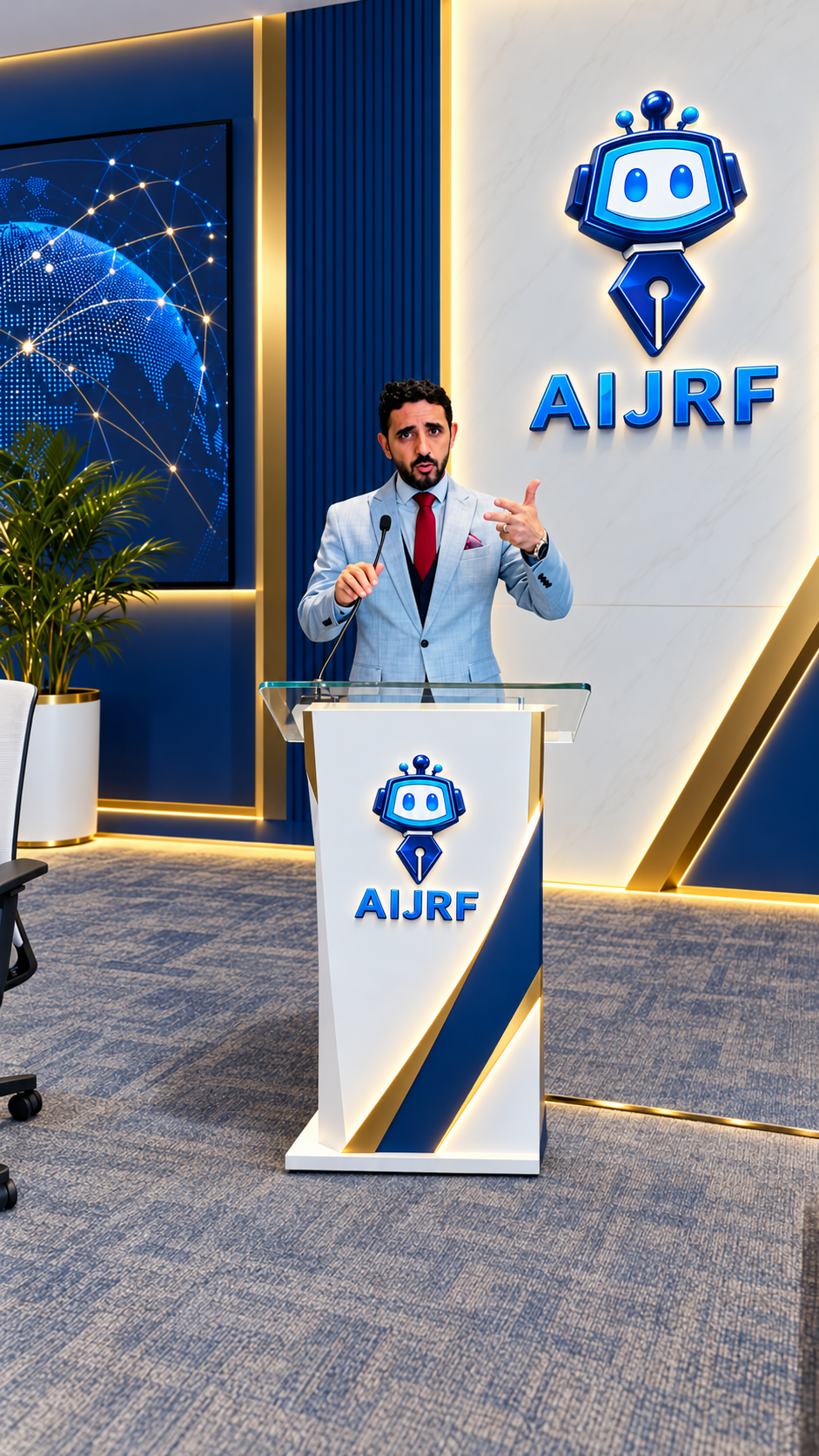
DUBAI, 21st October, 2026 (WAM) — The Artificial Intelligence Journalism for Research and Forecasting (AIJRF), in collaboration with the University of Dubai and the Arab AI Index in Universities (AIU), has launched the fourth cohort of the Arab AI Researchers (AAIR) initiative, scheduled for 5th-7th November 2026.
The initiative will bring together four Arab universities — the University of Dubai, the University of Khorfakkan, Badr University in Cairo, and Al Qasimia University — to enhance the capabilities of Arab researchers and academics in utilising Agentic AI technologies and developing intelligent research systems that support scientific productivity and international academic publishing.
The fourth edition will be held under the theme, “Arab AI Researchers: From Generative AI to Intelligent Academic Agents in Academic Research.” It will feature 15 hours of hands-on training over three days, introducing participants to more than 15 AI tools and applications.
The programme will focus on transitioning from the individual use of generative AI tools to developing intelligent academic agents capable of performing interconnected research tasks under human supervision and in accordance with academic integrity and governance standards.
Dr. Mohamed Abdulzaher, CEO of the AIJRF, said the fourth edition represents a significant evolution in the initiative’s approach, with a comprehensive focus on developing AI agents and strengthening the role of Agentic AI as an intelligent research assistant.
He stated, “We will train participants to build AI agents that support scientific publishing in journals indexed in Scopus and Web of Science, while also developing teams of agents to manage literature reviews, research surveys, interviews, and data analysis. This will allow Arab researchers to devote greater attention to critical thinking, innovation, and meaningful scientific contributions.”
Dr. Abdulzaher emphasised that Agentic AI will not replace researchers’ intellectual creativity or scientific contributions but will fundamentally reshape the research skills required in the coming years.
“The ability to design, manage, and evaluate academic AI agents, while verifying their outputs, will become an essential skill for researchers and university faculty members. Those who master prompt engineering and the management of AI agents will be better positioned to manage academic and educational content efficiently,” he added.
This edition includes three main hands-on modules: Developing an AI Agent for Research and Publishing in Scopus-Indexed Journals, Developing an AI Agent for Publishing in Web of Science-Indexed Journals and Building an Academic Multi-Agent Research Team.
The first module focuses on training participants to design and develop an AI agent that supports scientific research and international publication in journals indexed in Scopus.
The training will cover searching academic literature, analysing references and previous studies, identifying suitable journals within specific research disciplines, reviewing publication requirements, and assisting in the preparation of scientific manuscripts in accordance with academic standards.
The second module focuses on developing a specialised AI agent to support international academic publishing in journals indexed in Web of Science.
The agent will assist researchers in analysing scientific publishing trends, identifying appropriate academic journals, reviewing manuscript preparation requirements, improving the quality of research papers, and checking their alignment with journal guidelines, editorial policies, and research ethics.
The third module focuses on developing an integrated Academic Multi-Agent Team, in which each intelligent agent is assigned specific research responsibilities.
These responsibilities include conducting literature reviews, analysing previous studies, processing quantitative and qualitative research data, managing research surveys, supporting the design of academic interviews, and analysing interview findings.
The module seeks to empower researchers to manage hybrid research teams that combine human expertise with the capabilities of specialised AI agents.
This approach is expected to improve research efficiency, reduce the time required for repetitive tasks, and allow researchers to focus on higher-value intellectual and scientific activities while maintaining full human responsibility for the accuracy of findings, the reliability of sources, and academic decisions.
The participation of the four universities reflects the initiative’s expanding network of academic partnerships and its commitment to promoting knowledge exchange among Arab higher education institutions.
The initiative seeks to establish an Arab research community capable of benefiting from global advances in AI, encouraging collaborative research projects among universities, supporting Arabic-language scientific knowledge production, and strengthening the international academic publishing presence of Arab researchers.
The programme targets university faculty members, researchers, postgraduate students, professionals working in research and innovation centres, and specialists in the application of AI in higher education.
Participants are expected to conclude the programme by developing practical projects involving specialised academic AI agents that can be applied within their respective research disciplines.
Participants who successfully fulfil the programme requirements will receive a certificate of training completion in accordance with the initiative’s approved guidelines.
Source: Emirates News Agency