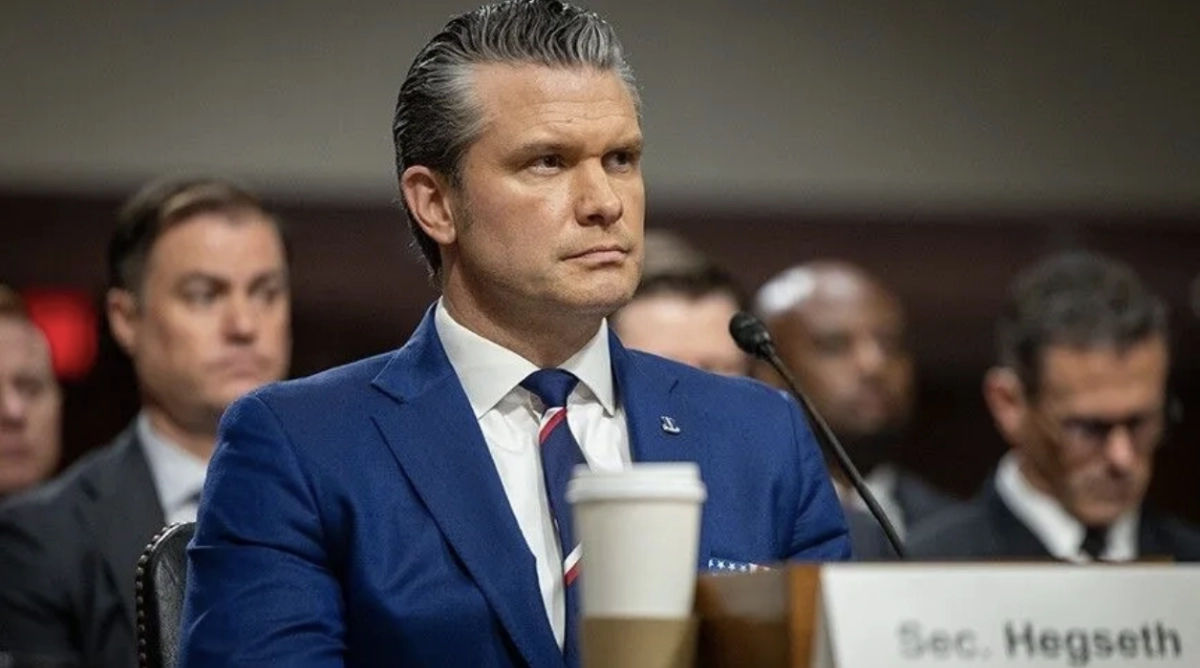
WASHINGTON — US Defense Secretary Pete Hegseth warned Saturday that Iran must abandon its nuclear ambitions and reach a negotiated agreement with Washington or face potentially devastating American military action.
Speaking to Reserve Officers’ Training Corps cadets and military recruits at the University of Tennessee, Hegseth said Tehran would soon face a decisive choice between diplomacy and military confrontation.
“Iran’s going to have a choice to make real quick about whether they’re going to give those up at the table or face the kind of devastation that America can bring and will bring swiftly if necessary,” Hegseth said.
The defense secretary accused Iran of developing a substantial conventional missile arsenal to deter military intervention while continuing to pursue what he described as its nuclear ambitions.
He argued that American military strength was essential to compelling adversaries to negotiate, presenting Washington’s approach as a combination of diplomatic pressure and credible military force.
Hegseth also accused Tehran of financing armed groups across the Middle East, including Hezbollah and the Houthi militia in Yemen.
Iran “funds the proxies in Hezbollah, funds the proxies in the Houthis in Yemen,” he said, emphasizing that Washington had sought to deter attacks on American forces and commercial shipping.
The remarks come amid heightened tensions between Washington and Tehran, with the Trump administration maintaining pressure on Iran over its nuclear activities, missile capabilities and support for armed groups in the region.
Hegseth framed the administration’s Iran policy as part of President Donald Trump’s broader effort to reassert American military and strategic influence worldwide.
He also highlighted Washington’s campaign against drug cartels and its efforts to limit the influence of Iran, China and Russia in Latin America.
Turning to Venezuela, Hegseth said the US operation in the country would have “generational implications,” describing Venezuela as a strategic partner and emphasizing the importance of its oil resources.
He said Washington was working to strengthen its military presence and regional partnerships while reducing the influence of rival powers in the Western Hemisphere.
Source: Saudi Gazette