Dell Technologies recently released findings from its Modern Enterprise Readiness Study 2026, conducted with independent research firm Vanson Bourne.
The study surveyed 1,500 business and IT decision-makers across EMEA, including the UAE, as part of a global survey of 2,950 respondents in 35 countries. Research was conducted in June 2026 and included organisations across financial services, healthcare, manufacturing, retail, energy and utilities, and the public sector.
Why it matters
The findings reveal a region entering a new phase of digital transformation. UAE organisations are navigating a complex environment shaped by economic uncertainty, accelerating AI adoption, growing cyber threats, and evolving regulations. As organisations look to balance innovation with resilience and compliance, they are increasingly focusing on technology investments that deliver measurable business outcomes and support long-term competitiveness.
Against this backdrop, four key trends are emerging that are shaping the next phase of enterprise transformation across the UAE.
Finding 1: Economic pressure is driving strategic technology decisions
Economic uncertainty continues to influence technology investment decisions across the UAE. Rather than reducing spending, organisations are becoming more focused on value, efficiency and business outcomes.
82% of leaders say current macroeconomic conditions are making them more selective about technology investments. This is contributing to a growing preference for simplification and consolidation, with 86% saying they would prefer to meet more of their technology needs through a single strategic partner.
Businesses are also raising expectations of their providers. 86% are shifting investment toward partners with the scale, ecosystem and supply chain capabilities needed to move modernisation and AI initiatives from pilot projects to production environments.
The results indicate a move away from fragmented technology environments toward strategic relationships that can simplify operations, accelerate innovation and deliver measurable business outcomes.
Finding 2: Modern workplace technology has become essential to AI readiness
As AI becomes more deeply embedded in everyday workflows, workplace technology is evolving from a productivity tool into a strategic enabler of transformation.
The study found that 98% of respondents believe modern devices improve collaboration and workforce productivity, while 66% say outdated devices limit their ability to adopt new technologies, including AI-powered applications. This growing dependence on intelligent applications is influencing refresh priorities. 94% of UAE leaders say AI PCs and modern endpoints will play an important role in their organisation’s future workplace strategy.
For many enterprises, workplace modernisation is no longer simply about replacing aging hardware. It is becoming a foundational requirement for supporting AI-enabled productivity, improving employee experiences and strengthening endpoint security.
Finding 3: AI adoption is advancing, but scaling requires stronger foundations
AI adoption is gaining momentum across the UAE, but many organisations are discovering that scaling AI successfully requires much more than deploying models.
- Security, compliance and privacy have emerged as critical considerations as organisations navigate evolving regulatory frameworks and growing scrutiny around data usage. 68% of leaders say they are concerned about complying with government regulations when using data for AI, while an equal number (68%) report that security and compliance concerns have already slowed or delayed AI adoption initiatives.
- Infrastructure readiness remains another significant challenge. 68% of IT leaders say their infrastructure is not yet fully prepared to support AI and analytics workloads at production scale.
As organisations move from experimentation to operational deployment, success increasingly depends on modern infrastructure, trusted data, strong governance frameworks and clear alignment with regulatory requirements.
Finding 4: Security has become a baseline requirement
Cybersecurity is no longer viewed as a standalone technology decision. Instead, organisations increasingly expect security to be embedded across infrastructure, devices, AI environments and partner engagements from the outset.
90% of UAE business and IT leaders expect security to be included in every proposal from a strategic technology partner rather than treated as a separate consideration. Reflecting growing concerns around cyber resilience and business continuity, 94% say integrated data protection and cyber recovery capabilities are important criteria when evaluating infrastructure platforms.
Organisations are also increasingly looking outside their own teams for support, with 78% expecting their use of managed security services to increase over the next two to three years.
In addition, the UAE regulatory requirements under Cyber Security Council’s Critical Information Infrastructure Protection framework and Information Assurance requirements, alongside the UAE Personal Data Protection Law and sector-specific requirements such as the CBUAE’s operational resilience and ICT cybersecurity regulations, are reinforcing the need for security and resilience to be built into technology strategies from day one, making cyber readiness a board-level priority rather than an IT-only concern.
Perspectives
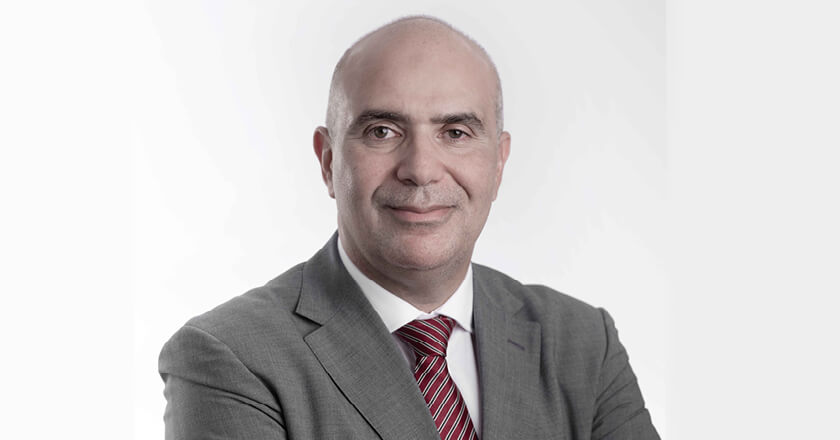
Walid Yehia, Managing Director – South Gulf, Dell Technologies: “The message from business leaders is clear: the time for AI experimentation is ending, and the focus is shifting to execution. Organisations across the UAE need secure infrastructure, trusted data, cyber resilience and the right ecosystem of partners to scale innovation successfully. Those that build these foundations today will be the ones that lead tomorrow. At Dell Technologies, we’re helping customers take the next step – transforming AI ambition into business advantage through secure, modern and scalable technology solutions”.
Image Credit: Dell Technologies
Source: Tahawul Tech